
Few dental procedures carry as much baggage as the root canal. Mention it in casual conversation and you can almost guarantee a wince, a joke, or a story about someone’s cousin who “went through hell.” Over the years, root canals have become shorthand for dental dread, even though the reputation has very little to do with what the procedure is actually like today.
The truth is that a root canal is one of the most effective ways to save a tooth that would otherwise need to be removed. It relieves pain rather than causing it, and thanks to modern techniques and anesthesia, most patients describe the experience as no more uncomfortable than getting a filling. Separating the myths from the reality can help take away much of the fear that keeps people from getting the care they need.
What a Root Canal Actually Treats
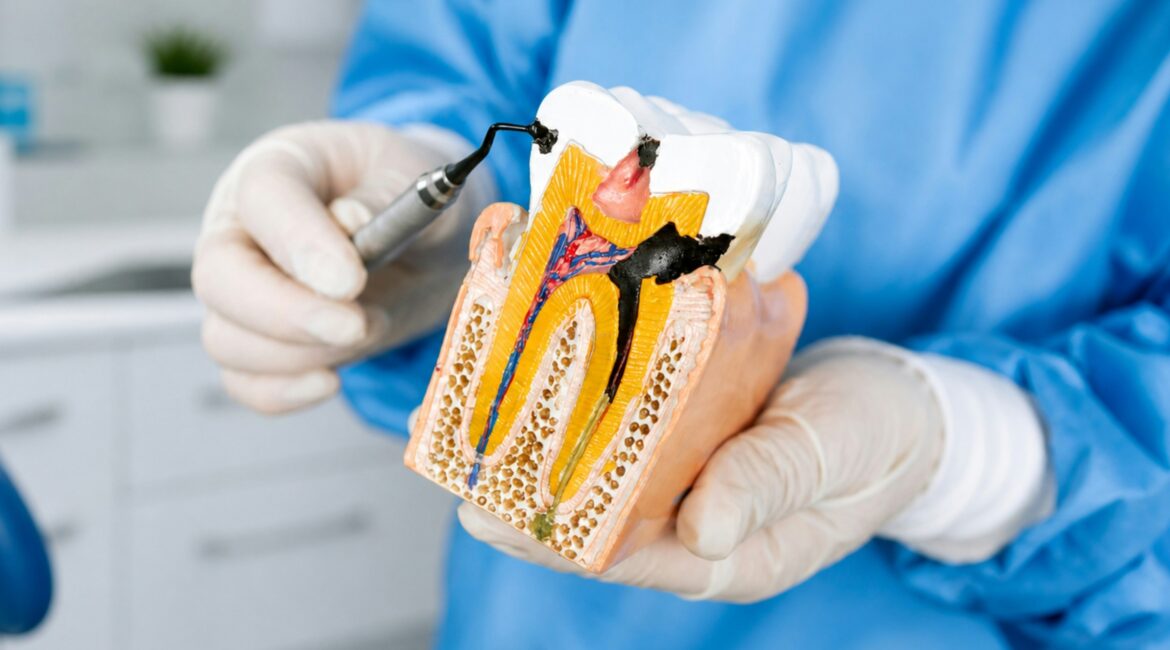
Inside every tooth, beneath the enamel and dentin, is a soft tissue called pulp. It contains nerves, blood vessels, and connective tissue, and it plays an important role while a tooth is developing. Once a tooth is fully mature, it can survive without the pulp, drawing what it needs from the surrounding tissue.
When that pulp becomes infected or inflamed, usually from a deep cavity, a cracked tooth, or repeated dental work on the same tooth, it can cause significant pain and, left untreated, lead to an abscess. A root canal removes the damaged pulp, cleans and disinfects the inside of the tooth, and seals it to prevent further infection. The tooth is then typically restored with a crown to protect it going forward.
In short, a root canal doesn’t create the problem. It treats a problem that already exists, and it does so in a way that lets you keep your natural tooth.
Myth: Root Canals Are Extremely Painful
This is by far the most common misconception, and it’s rooted more in outdated history than in current practice. Decades ago, before modern anesthesia and technology, root canals had a well-earned reputation for discomfort.
Today, that’s no longer the case. Local anesthesia numbs the area completely before treatment begins, and the process itself is designed to relieve the very pain that brought the patient in. Most people report that a root canal feels similar to having a cavity filled. Some soreness in the days afterward is normal, but it’s usually manageable with over-the-counter pain relievers and fades within a few days.
Myth: It’s Better to Just Pull the Tooth
Extraction can feel like a simpler solution, but it often creates more problems than it solves. Removing a tooth leaves a gap that can allow neighboring teeth to shift, change how you bite and chew, and eventually require a bridge or implant to replace what was lost.
A root canal, by contrast, preserves your natural tooth and its root structure, which helps maintain the shape of your jaw and the alignment of your bite. Whenever a tooth can be saved, dentists generally recommend doing so, since no replacement fully matches the function of a natural tooth.
Myth: Root Canals Cause Illness
A persistent myth suggests that root canal treatment is linked to other health problems elsewhere in the body. This idea traces back to research from the early 1900s that has since been thoroughly discredited. Modern dental research, including reviews from major dental and medical associations, has found no valid evidence connecting root canal treatment to disease in other parts of the body.
What actually poses a health risk is an untreated infection. Bacteria from an infected tooth can spread if left unaddressed, which is one of the reasons dentists recommend treating the problem rather than ignoring it.
Myth: Recovery Takes a Long Time
Many patients are surprised by how quickly they return to normal activities after a root canal. Most people are back to work or their regular routine the next day, sometimes even the same day. There may be mild tenderness around the tooth for a few days as the surrounding tissue heals, but this is usually far less intense than the pain that led to treatment in the first place.
Following your dentist’s aftercare instructions, such as avoiding chewing on the treated tooth until a permanent crown is placed, helps the healing process go smoothly.
The Reality: A Root Canal Relieves Pain, It Doesn’t Cause It
If there’s one thing worth remembering, it’s this: by the time a tooth needs a root canal, it’s already causing problems. The infection or inflammation inside the tooth is what generates the throbbing, sensitivity, or swelling that patients notice. The procedure itself is what brings relief.
Patients often say that the moment of greatest discomfort was before they ever sat in the dental chair, back when the untreated infection was at its worst. Once treatment begins, most of that discomfort starts to fade.
When to Consider a Root Canal
Signs that a tooth may need root canal treatment include lingering sensitivity to hot or cold, pain when chewing or applying pressure, a darkening tooth, or swelling and tenderness in the gums near a specific tooth. Sometimes there are no obvious symptoms at all, and the issue is only discovered during a routine exam or X-ray.
If you notice any of these signs, it’s worth having the tooth evaluated sooner rather than later. Catching an issue early often means a simpler, more comfortable treatment.
Moving Past the Fear
Root canals have earned an unfair reputation that no longer matches the reality of modern dental care. With effective anesthesia, refined techniques, and a clear goal of relieving pain rather than causing it, the procedure is far more comfortable than most people expect.
If you’re dealing with tooth pain or have been told you may need a root canal, don’t let the myths keep you from getting the care that will actually make you feel better. Our team is happy to answer your questions and walk you through exactly what to expect.